Launch offer — valid today only

📄 Digital book in PDF · read it on your phone or print it

Smoke Vents and AOVs in Drawings, from the Panel to the Log Book Every Check in the Same Order

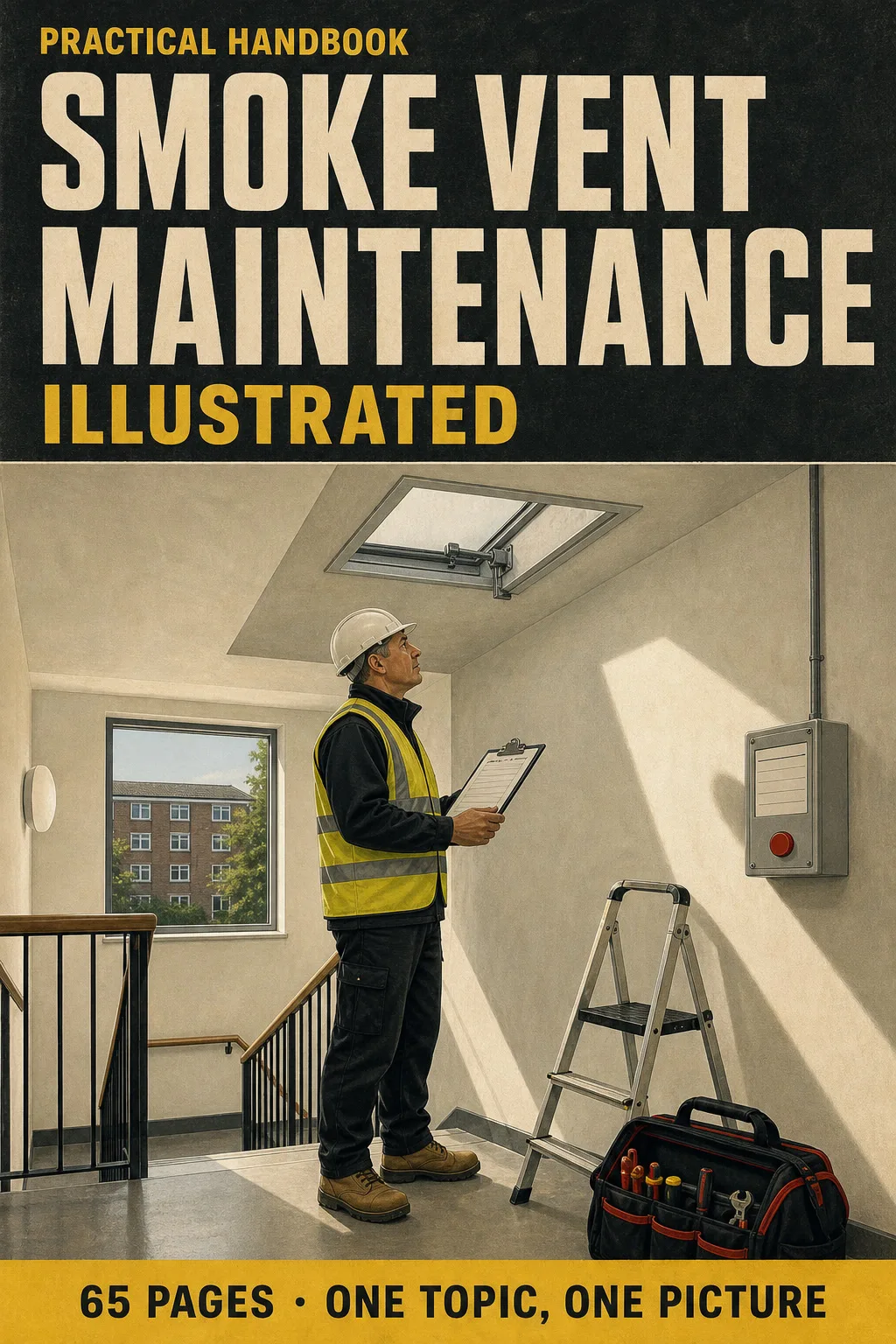
From detector to panel to vent: AOVs, actuators, batteries, the weekly to annual checks and simple fault finding. One topic per page: the drawing first, then what to remember. 65 illustrated pages.

GET THE ILLUSTRATED BOOK (PDF)

🔒 Secure checkout · PDF by email · 30-day guarantee

Every topic, its own pageEach part and each check drawn, with the explanation beside it
65 illustrated pages8 parts, from how smoke moves in a block to the final checklist for the visit
Up-to-date sourcesApproved Document B, BS 9991 and the BS EN 12101 series
PDF by emailFormat

Look Inside the Book

Every page has one large drawing and a box with the checks, figures and steps you need to know:

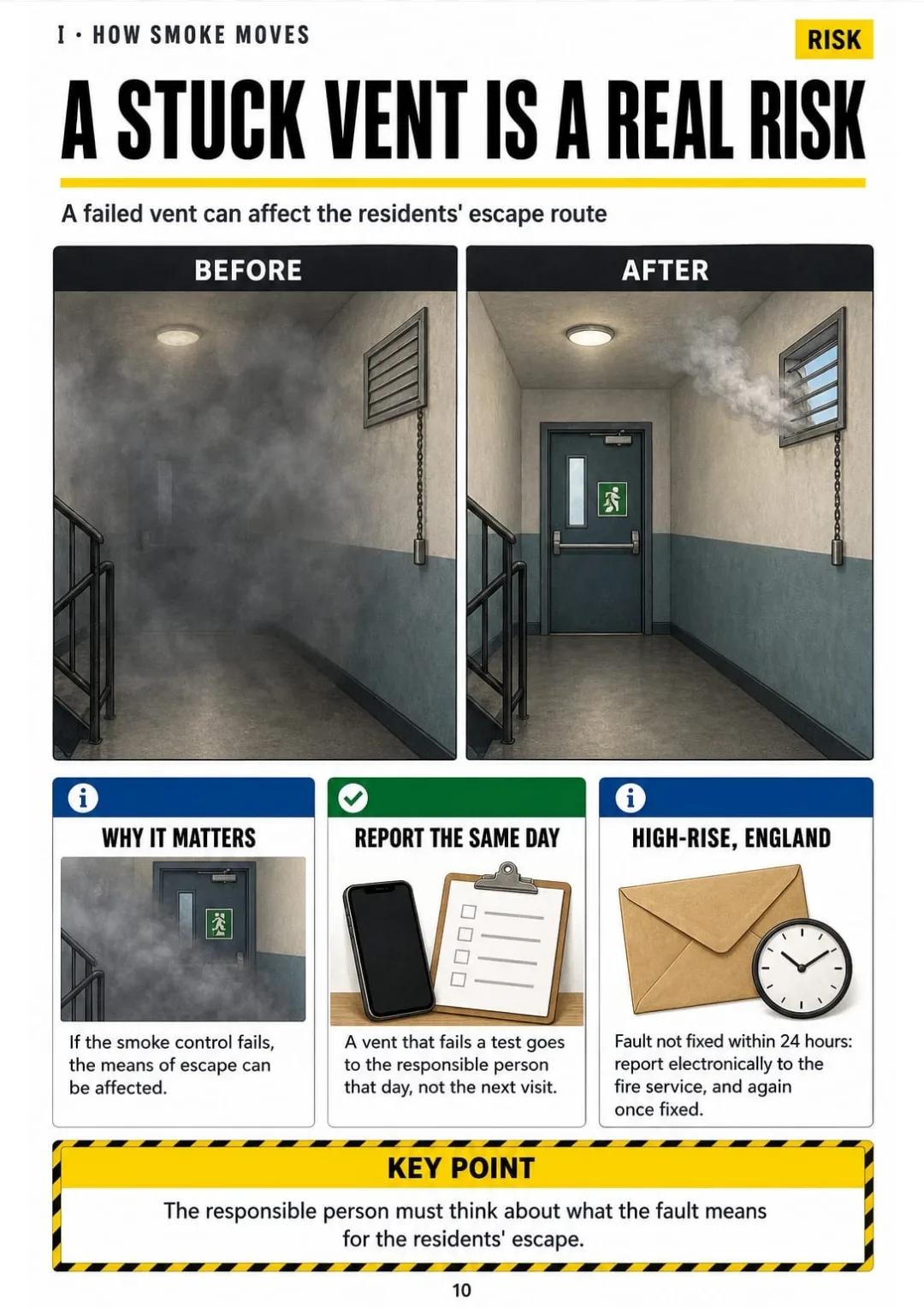
High-rise blocks in England: faults not fixed within 24 hours are reported to the fire service.
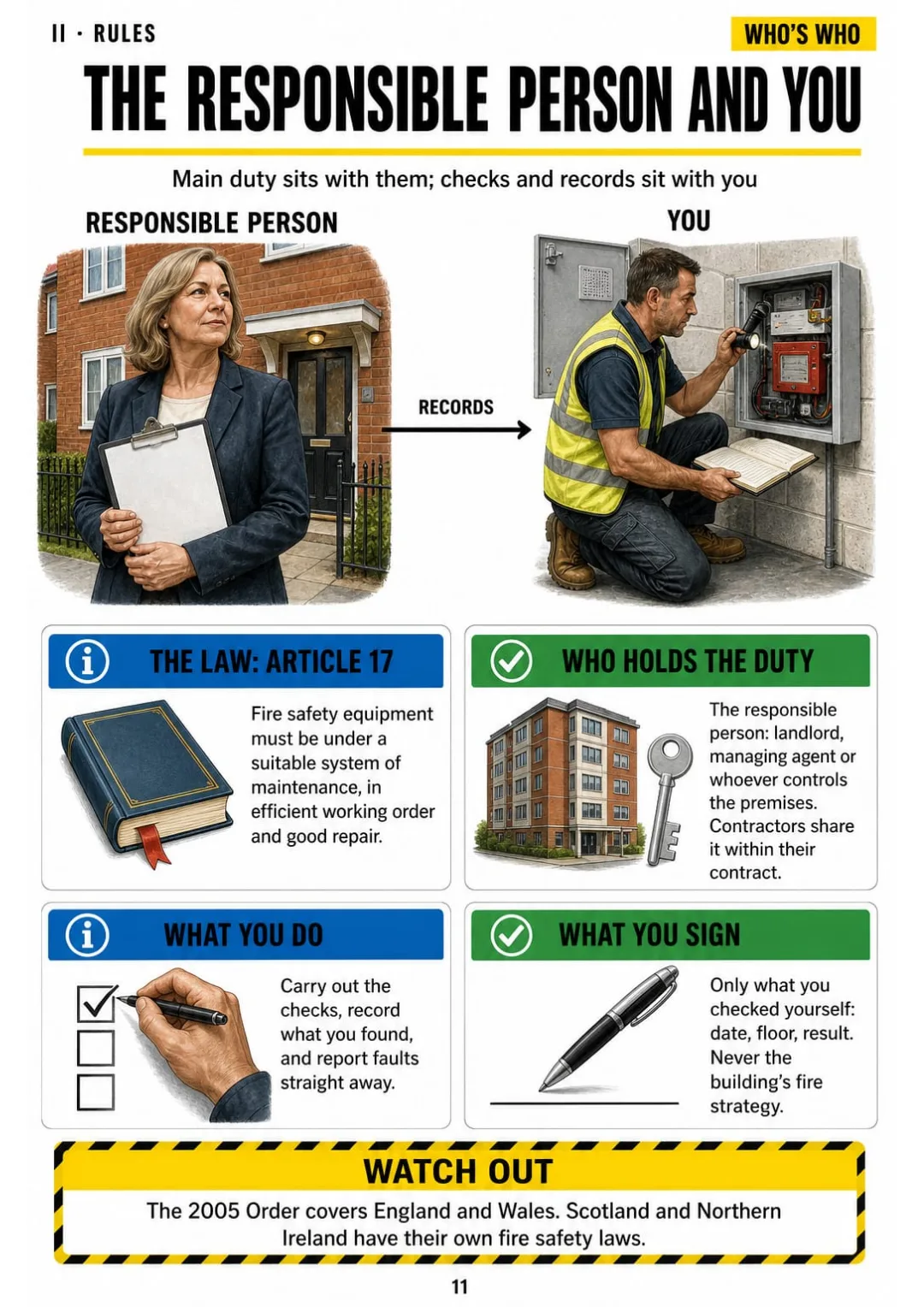
Article 17 of the 2005 Order: the duty is theirs, the record is yours.
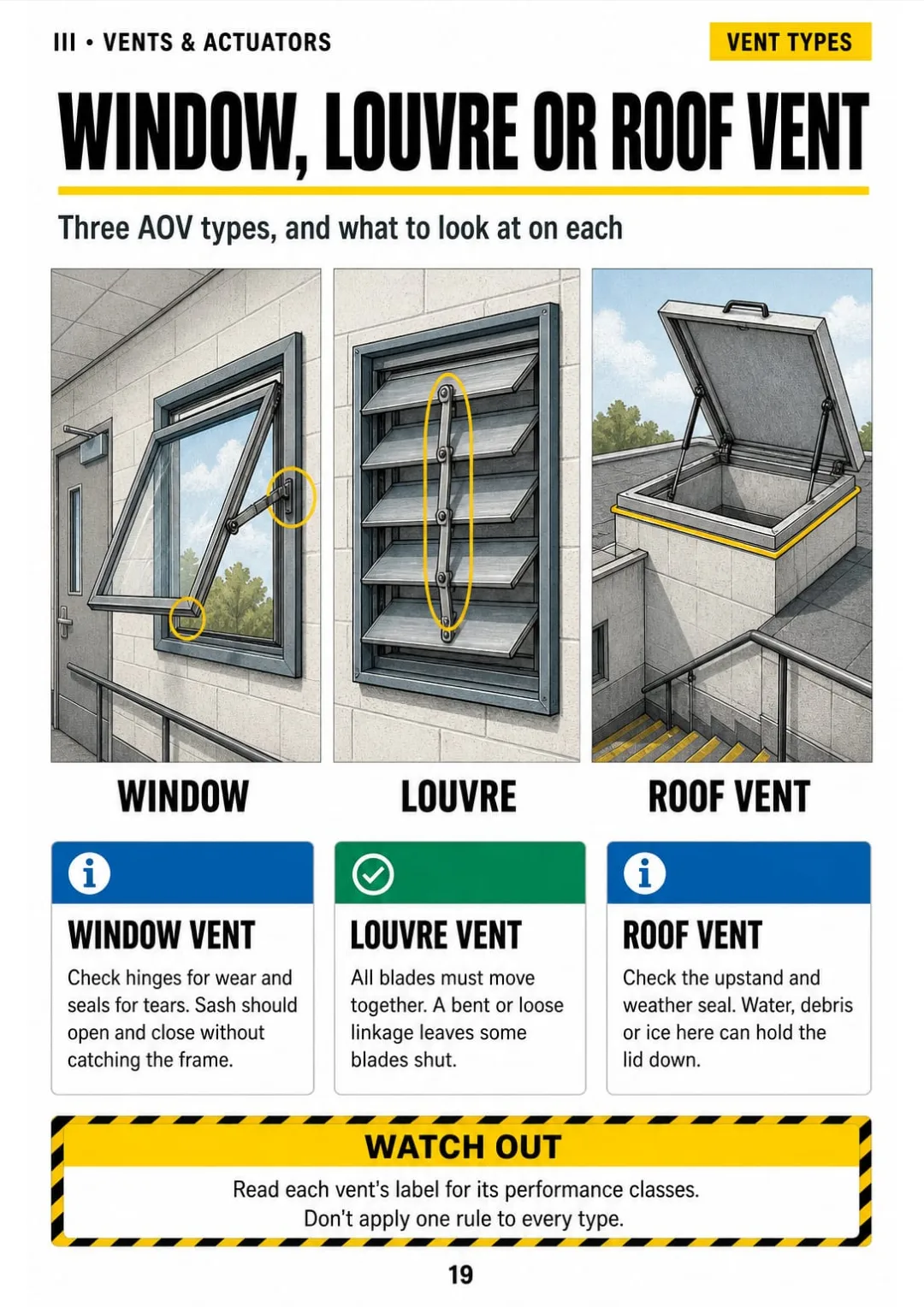
Hinges and seals, blade linkage, upstand and weather seal: what to check on each AOV type.
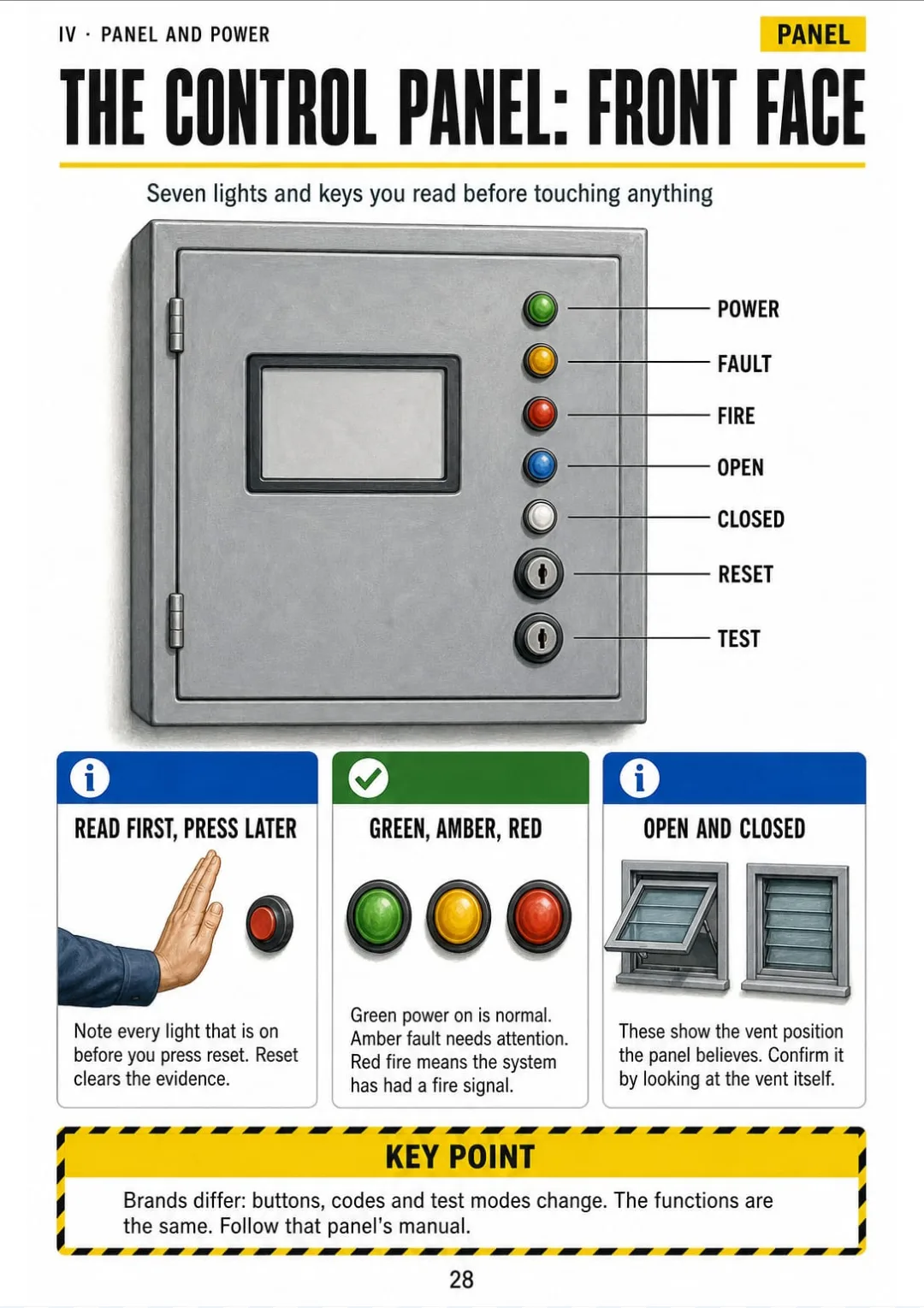
Power, fault, fire, open, closed, reset, test: the panel face named.
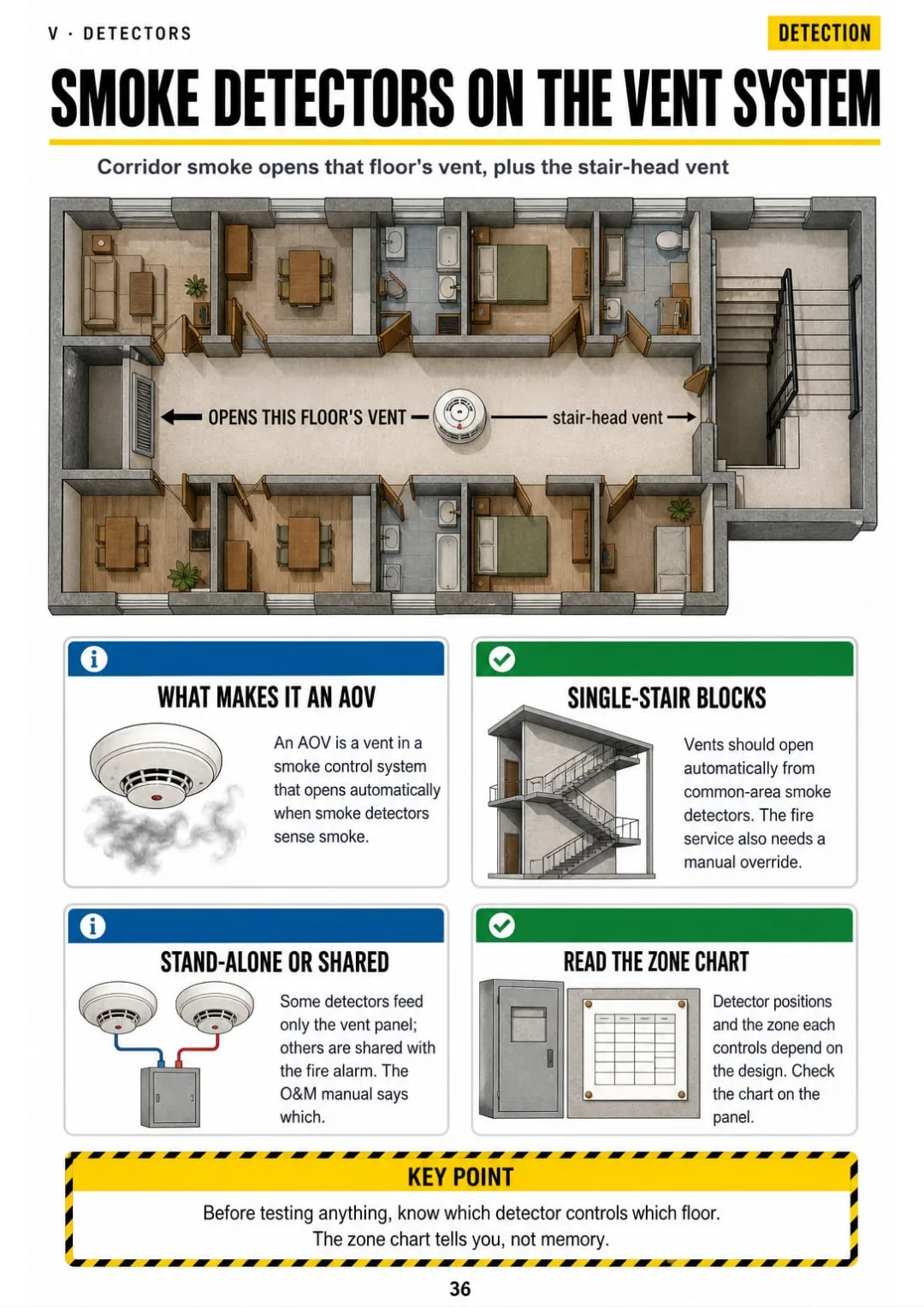
Corridor or lobby detector → that floor's vent; the zone chart on the panel shows which.
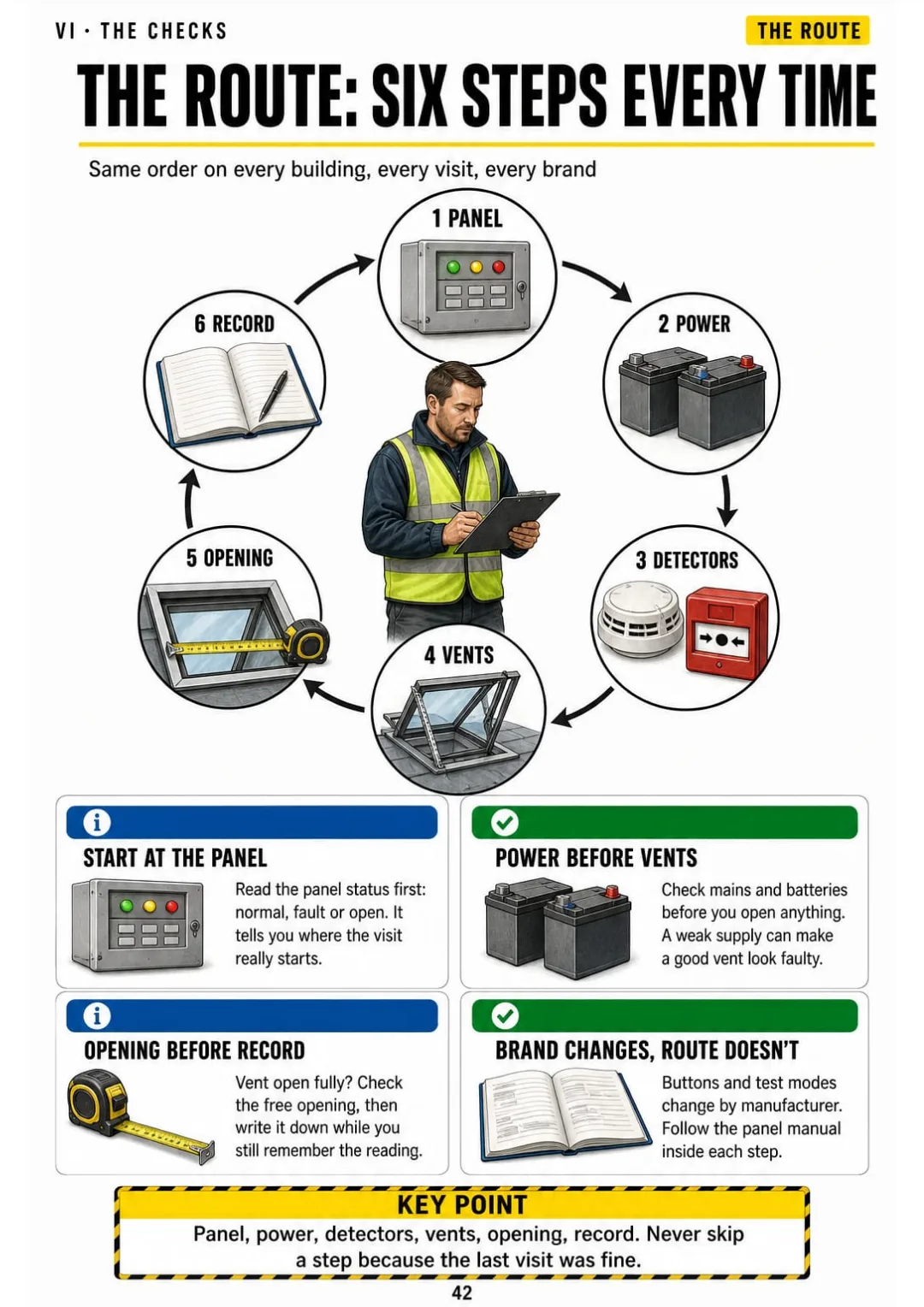
Panel → power → detectors → vents → free opening → record: one loop for every visit.
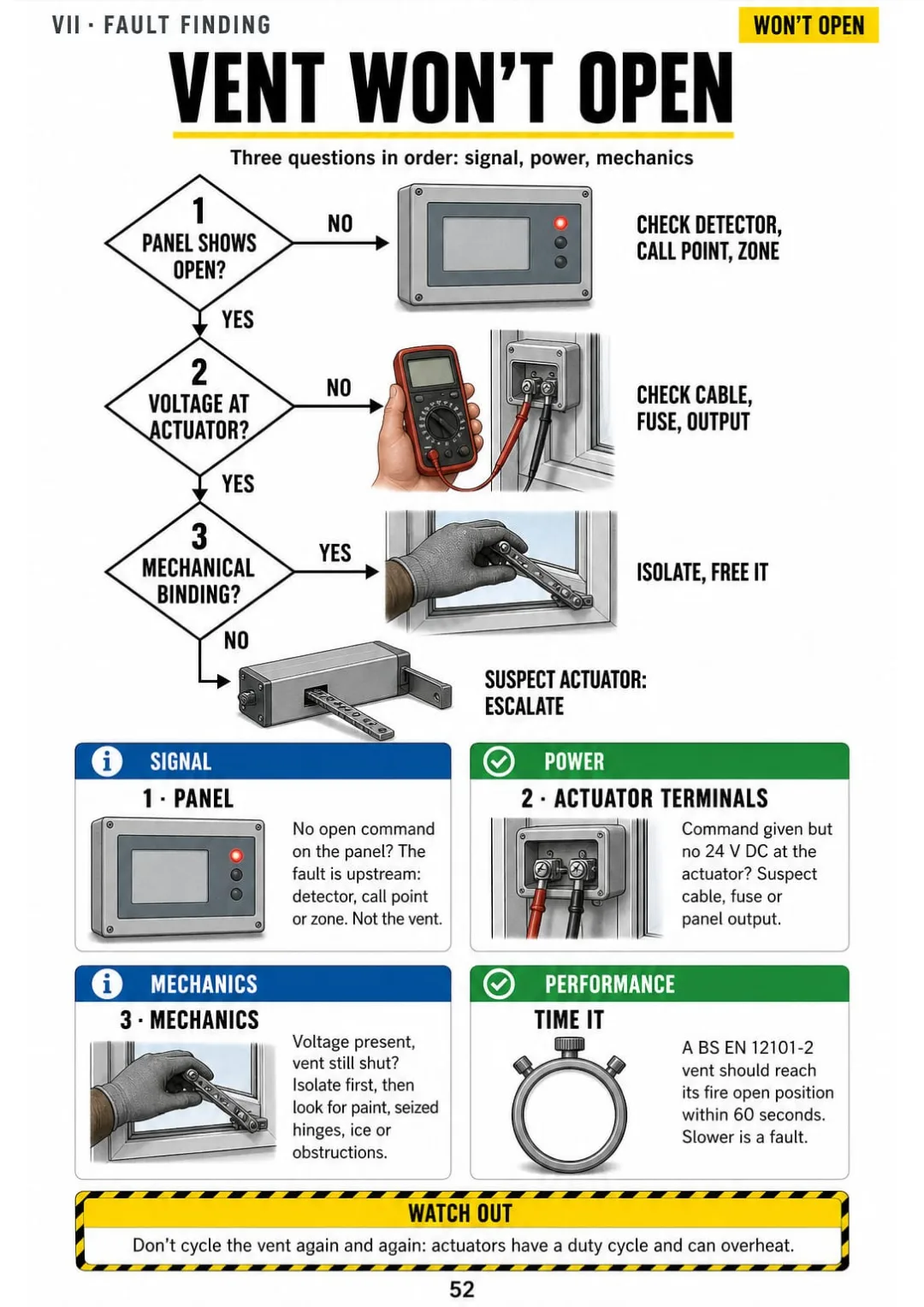
Vent won't open: panel command → 24 V DC at the actuator → mechanical binding
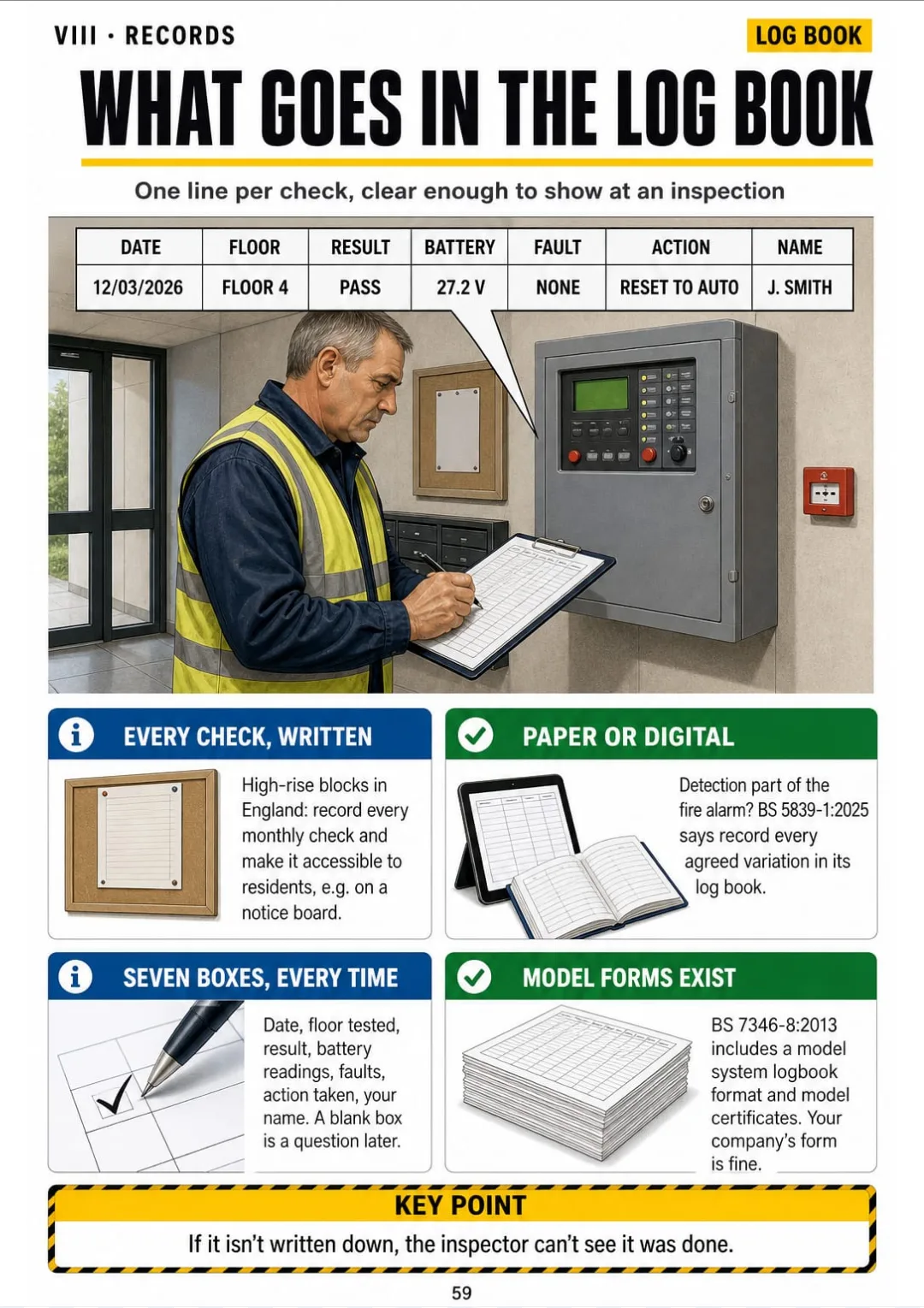
Date, floor, result, battery, fault, action, name: the log line inspectors want to see

Swipe to see more →

These are real pages from the book. The table of contents is the full one: 8 parts and 61 topics.

The Problem Isn't You. It's How It Was Explained.

You're on the top landing with the stair AOV open above you, and you can't tell whether the sash, the actuator or the limit switch is the problem. The caretaker is standing right behind you.

The manufacturer's manual describes the vent in paragraphs: frame, hinges, bracket and seals, each one in a different section. Words don't show you where one part ends and the next begins.

Hinges and seals, blade linkage, upstand and weather seal: what to check on each AOV type.

In the book, the AOV is one exploded drawing: frame, sash, hinges, seals, actuator, bracket and limit switch, each one named with an arrow to where it sits.

The same goes for the control panel face, the smoke shaft in section, the 24 V DC supply to the actuator, the batteries and the six-step route. Each one has its own page.

You look up at the vent, you know exactly what you're looking at, and you carry on with the check without going back to the manual.

COMPARE FOR YOURSELF

The Same Topic, Two Ways to Learn It

THIS
  • The manual: line after line
  • Duties and records explained only in words
  • You arrive on site still unsure
Pursuant to Article 17 of the Regulatory Reform (Fire Safety) Order 2005, it falls to the responsible person to ensure that fire safety facilities and equipment provided in the premises, smoke control installations included, are subject to a suitable maintenance regime and kept in proper working order. Where such duties are discharged through a contractor, the responsible person nonetheless retains the statutory obligation, whilst the competent person carrying out inspection, testing and servicing is expected to record results in a form that demonstrates compliance and allows deficiencies to be identified and remedied.
FOR THIS
  • Who does what, in one drawing
  • The duty and the record in a box
  • You see it and it makes sense
Article 17 of the 2005 Order: the duty is theirs, the record is yours.
CONTENTS

Take a Look at the 8 Parts and 61 Topics

How smoke moves, the rules and who does what, vents and actuators, panel and batteries, detectors and call points, the checks, fault finding and records: 65 pages, all illustrated

IHow Smoke Moves in a Block · pp. 5-10
  1. Why smoke, not fire, blocks the stair
  2. Hot smoke rises, cool air comes in low
  3. Corridor, lobby, stair: the three zones
  4. Natural vent vs smoke shaft vs mechanical
  5. What happens in the first minutes of a fire
  6. Why a closed or stuck vent is a real risk
IIRules and Who Does What · pp. 11-17
  1. The responsible person and you
  2. High-rise blocks: the monthly duty
  3. Approved Document B in one page
  4. Smoke shaft rules at a glance
  5. The standards on the label
  6. Weekly, monthly, annual: who does which
  7. When to hand it to a specialist
IIIVents, Shafts and Actuators · pp. 18-27
  1. The AOV: parts named
  2. Window, louvre or roof vent
  3. Geometric vs aerodynamic free area
  4. Measuring the opening on site
  5. The smoke shaft in section
  6. Shaft dampers and their seals
  7. Chain actuators
  8. Linear and rotary actuators
  9. 24 V DC: what the actuator needs
  10. Weather, birds and paint: what stops a vent
IVControl Panel, Power and Batteries · pp. 28-35
  1. The control panel: front face
  2. Inside the panel
  3. Mains supply and isolation
  4. Batteries: two 12 V in series
  5. Reading a battery under load
  6. Battery date and replacement
  7. Standby time explained
  8. Fault light: what it can mean
VDetectors, Call Points and Switches · pp. 36-41
  1. Smoke detectors on the vent system
  2. Testing a detector the right way
  3. Break glass and vent control points
  4. Firefighter override switch
  5. Interface with the fire alarm
  6. Environmental and comfort ventilation
VIThe Checks, Always in the Same Order · pp. 42-51
  1. The route: six steps every time
  2. Before you start: warn and isolate
  3. Weekly test step by step
  4. Rotating the test floor
  5. Monthly check in high-rise blocks
  6. Annual service: the full list
  7. Vent and actuator inspection
  8. Checking the free opening
  9. Stair-head vent and roof access
  10. Putting everything back to normal
VIISimple Fault Finding · pp. 52-58
  1. Vent won't open
  2. Vent won't close
  3. Vent opens part way
  4. Panel fault light on arrival
  5. Low battery reading
  6. Detector fires the wrong floor
  7. When to stop and escalate
VIIIRecords and Quick Revision · pp. 59-65
  1. What goes in the log book
  2. Writing a fault report
  3. Labels and signs to check
  4. Different brands, same route
  5. Key figures at a glance
  6. The 10 checks most often missed
  7. Final checklist for the visit

One Page, One Topic, All Clear

Think of it this way:

It's the weekly test. You open the vent from the panel and it only moves halfway, while a resident on the stairs asks whether everything is all right.

You open the book at the page for a vent that opens part way and see the chain actuator, the bracket and the sash drawn together, with the things to check numbered in order.

Corridor or lobby detector → that floor's vent; the zone chart on the panel shows which.

The same with the battery reading under load, the firefighter override switch, the stair-head vent and the log book entry: each one on its own page.

Smoke Vent Maintenance Illustrated is 8 parts and 61 topics, all drawn, with the key figures at a glance and a final checklist for the visit at the end.

What you see drawn, you don't have to memorize.

What's Inside Smoke Vent Maintenance Illustrated:

Ipp. 5-10

How Smoke Moves in a Block

Why smoke, not fire, blocks the stair, hot smoke and cool air, corridor, lobby and stair, natural vent vs smoke shaft vs mechanical, and the first minutes of a fire.

IIpp. 11-17

Rules and Who Does What

The responsible person and you, the monthly duty in high-rise blocks, Approved Document B and smoke shaft rules on one page each, who does the weekly, monthly and annual checks, and when to call a specialist.

IIIpp. 18-27

Vents, Shafts and Actuators

The AOV with every part named, window, louvre and roof vents, the smoke shaft in section, dampers, chain, linear and rotary actuators on 24 V DC, and geometric vs aerodynamic free area. So you can point at any part on site and name it.

IVpp. 28-35

Control Panel, Power and Batteries

The panel face and what's inside, mains supply and isolation, two 12 V batteries in series, reading under load, battery date, standby time and what the fault light can mean.

Vpp. 36-41

Detectors, Call Points and Switches

Detectors on the vent system and how to test them, break glass and vent control points, the firefighter override, the fire alarm interface and comfort ventilation.

VIpp. 42-51

The Checks, Always in the Same Order

The six-step route, warning and isolating, the weekly test and rotating floors, the high-rise monthly check, the annual service, the free opening and putting everything back to normal.

VIIpp. 52-58

Simple Fault Finding

Vent won't open, won't close or opens part way, fault light on arrival, low battery, a detector that fires the wrong floor. Each fault with its checks in order, so you know where to start and when to stop and escalate.

VIIIpp. 59-65

Records and Quick Revision

The log book line, writing a fault report, labels and signs, different brands on the same route, key figures and the final checklist for the visit.

At the end of the book: A simple fault-finding section, key figures at a glance and a final checklist for the visit.
Plus: 2 Free Books

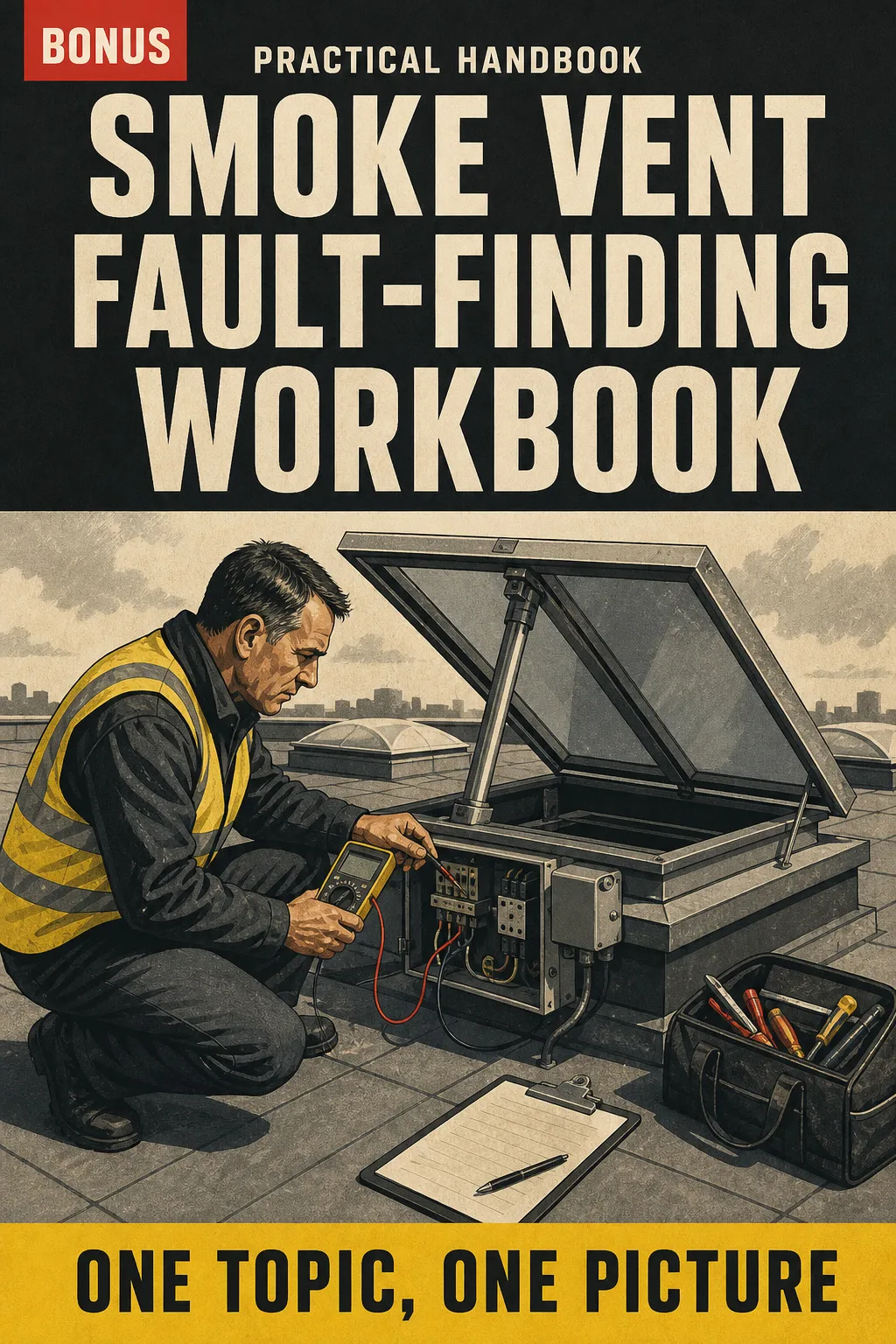
Smoke Vent Fault-Finding Workbook

BONUS 1: «Smoke Vent Fault-Finding Workbook»

Value on its own: US$ 17.90

Practise on real-life scenarios (vent won't open, vent won't close, panel fault light, low battery reading) and work out the next step before you see the answer.

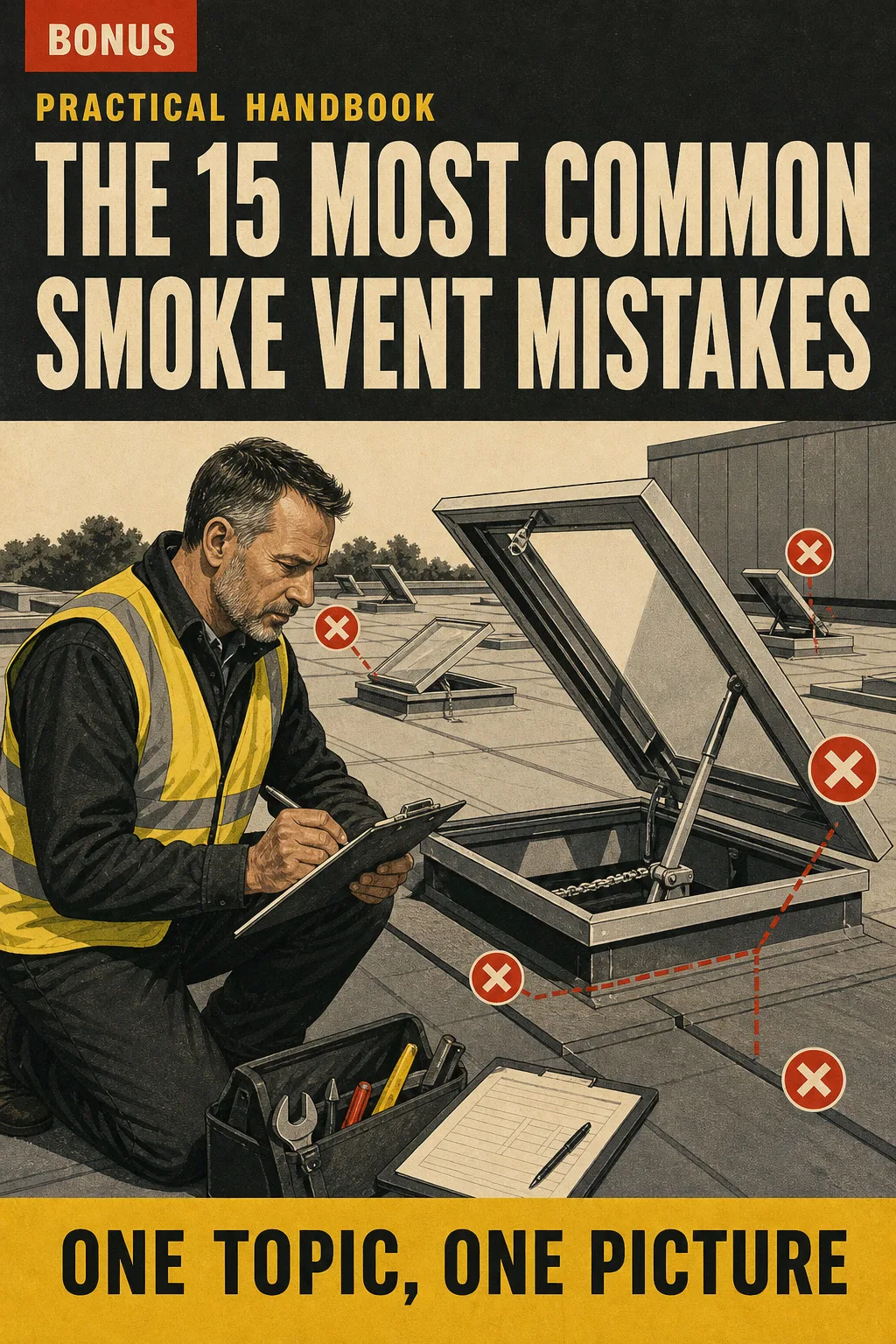
The 15 Most Common Smoke Vent Mistakes

BONUS 2: «The 15 Most Common Smoke Vent Mistakes»

Value on its own: US$ 14.90

Each frequent mistake drawn before and after, so you spot it on site and know what the right check looks like.

Smoke Vent Maintenance Illustrated with 2 Free Books

  • Smoke Vent Maintenance Illustrated: 65 illustrated pagesUS$ 63
  • BONUS 1: Smoke Vent Fault-Finding WorkbookUS$ 17.90
  • BONUS 2: The 15 Most Common Smoke Vent MistakesUS$ 14.90
  • High-resolution PDF to printIncluded
Total value US$ 95.80
YOUR PRICE:
US$ 27
You save US$ 68.80
YES, I WANT SMOKE VENT MAINTENANCE ILLUSTRATED FOR US$ 27

📄 This is a digital PDF book sent to your email: nothing is printed or shipped.

Secure purchaseEncrypted payment30-day guarantee

PDF by email: We email you Smoke Vent Maintenance Illustrated as a PDF, together with the two free books. It's a single payment: no installments, no extra charges.

Who This Book Is For

Smoke vents have just been added to your visits

Smoke vents have just been added to your visits

You see the whole system first, from detector to panel to vent, so the first visit doesn't start from a 60-page manual.

A visit or a records check is coming up

A visit or a records check is coming up

You follow the six-step route and fill the log book line by line, so the responsible person gets clear, tidy records.

You already maintain AOVs

You already maintain AOVs

You keep the fault-finding pages and the key figures at hand, printed in the van, for the fault you meet on the day.

Everything You Get Today

US$ 95.80US$ 27
YES, I WANT SMOKE VENT MAINTENANCE ILLUSTRATED FOR US$ 27

📄 This is a digital PDF book sent to your email: nothing is printed or shipped.

30DAYS
GUARANTEE

30-Day Guarantee

Try Smoke Vent Maintenance Illustrated for 30 days, bonus books included.

We refund everything if the file won't open, if the book isn't what you see here, if you were charged twice or if the email doesn't arrive. Just email us.

You pay once. No subscriptions.

Frequently Asked Questions

Is it for me if I already work in fire alarms, fire doors or passive fire protection and the smoke vents have just been added to my visits?

Yes, it's written for exactly that. It isn't a beginner's book: it shows the whole system, from detector to panel to vent, one topic per page. The parts and the route are the same whatever the brand. Brand-specific settings and fault codes still come from that manufacturer's manual.

Where does the content come from?

From guidance for England: Approved Document B Volume 1, the Fire Safety (England) Regulations 2022 and the Regulatory Reform (Fire Safety) Order 2005, plus BS 9991, BS EN 12101-2 and -10, BS 7346-8 and BS 5839-1. The equipment and the checks are the same across the UK, but Wales, Scotland and Northern Ireland have their own building and fire rules, so check those locally. Every figure and interval is flagged to check against the current edition and the manufacturer's manual.

Is it official material?

No. It's an independent illustrated book. It isn't issued or endorsed by any government body, standards body, association or manufacturer, and it doesn't give you a certificate or a qualification.

Does it replace training or the manufacturer's instructions?

No. It helps you understand and organise the checks, but it doesn't replace training, the manufacturer's instructions, the fire risk assessment or a competent person.

Are the practice scenarios taken from an official course or assessment?

No. The fault-finding scenarios are written for this book, to practise working out the next step on site.

When and how does it arrive?

As a PDF by email, to the address you enter at checkout. The two free books arrive the same way.

Do I have to pay every month?

No. It's a one-off payment, with no subscription.

Can I have it on paper?

Yes. The PDF prints well on A4, so you can keep the pages you need in the van or on site.

How does the refund work?

You have 30 days. We refund everything if the file won't open, if the book isn't what you see on this page, if you were charged twice or if the email doesn't arrive: just email us.

Before You Close This Page

No more rereading the manual and taking nothing in.

The AOV, the panel and the route: you see them drawn, and that's it.

You arrive on site knowing where everything is.

Drawings make studying faster.

The book is right below.

One-time payment: US$ 27 · Guarantee: 30 days · PDF by email

YES, I WANT SMOKE VENT MAINTENANCE ILLUSTRATED FOR US$ 27

📄 This is a digital PDF book sent to your email: nothing is printed or shipped.